
THE FIRST-LOOK GUIDE
Is it the real analog thing?
A retro cabinet can hide a digital printer. These clues help you tell the difference—without plugging in or dismantling a machine.
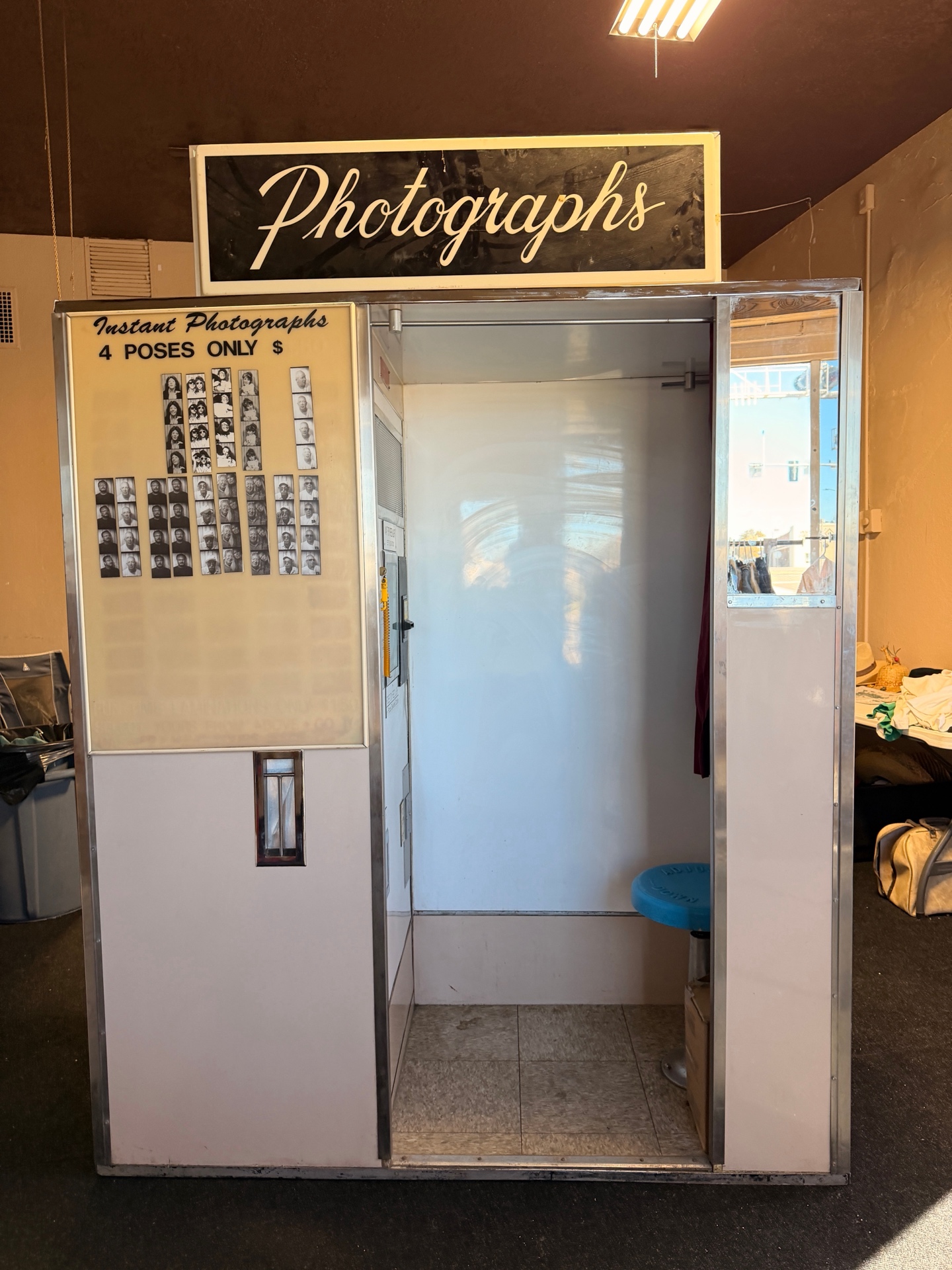 OUR ACTUAL MODEL 20 · EXTERIOR CLUES ONLY
Look beyond
the lovely curtain.
A period sign, seat and curtain tell part of the story. What makes a chemical booth is the system inside: a camera exposing photographic paper, paper handling, chemical tanks and a mechanism that moves the strip through its baths.
A computer, touchscreen and dye-sublimation printer suggest a digital machine—even when the outside looks wonderfully old-fashioned.
A cabinet may have been converted, or a critical mechanism may be missing. “Lights up” also isn't proof that it makes photographs.
THE MOST USEFUL PHOTOS
Four views. Much better clues.
The whole cabinet
Front, sides and roof sign. Show the entrance, seat, curtain and payment area without cropping away the cabinet.
The identification plate
A clear close-up of the maker, model and electrical plate. Keep serial numbers in your private submission—not in a public post.
Visible original machinery
If a service door is already safely accessible, an overview can help. Don't handle wiring, open flash equipment or disturb stored chemicals.
The pieces that come with it
Loose sign, tanks, keys, spare components, paperwork and old strips. Tell us what's separate and what is missing.
OUR FIRST MODEL REFERENCE
The Auto-Photo
Model 20.
What our real machine has taught us—and what the photographs still can't tell us.
Explore the Model 20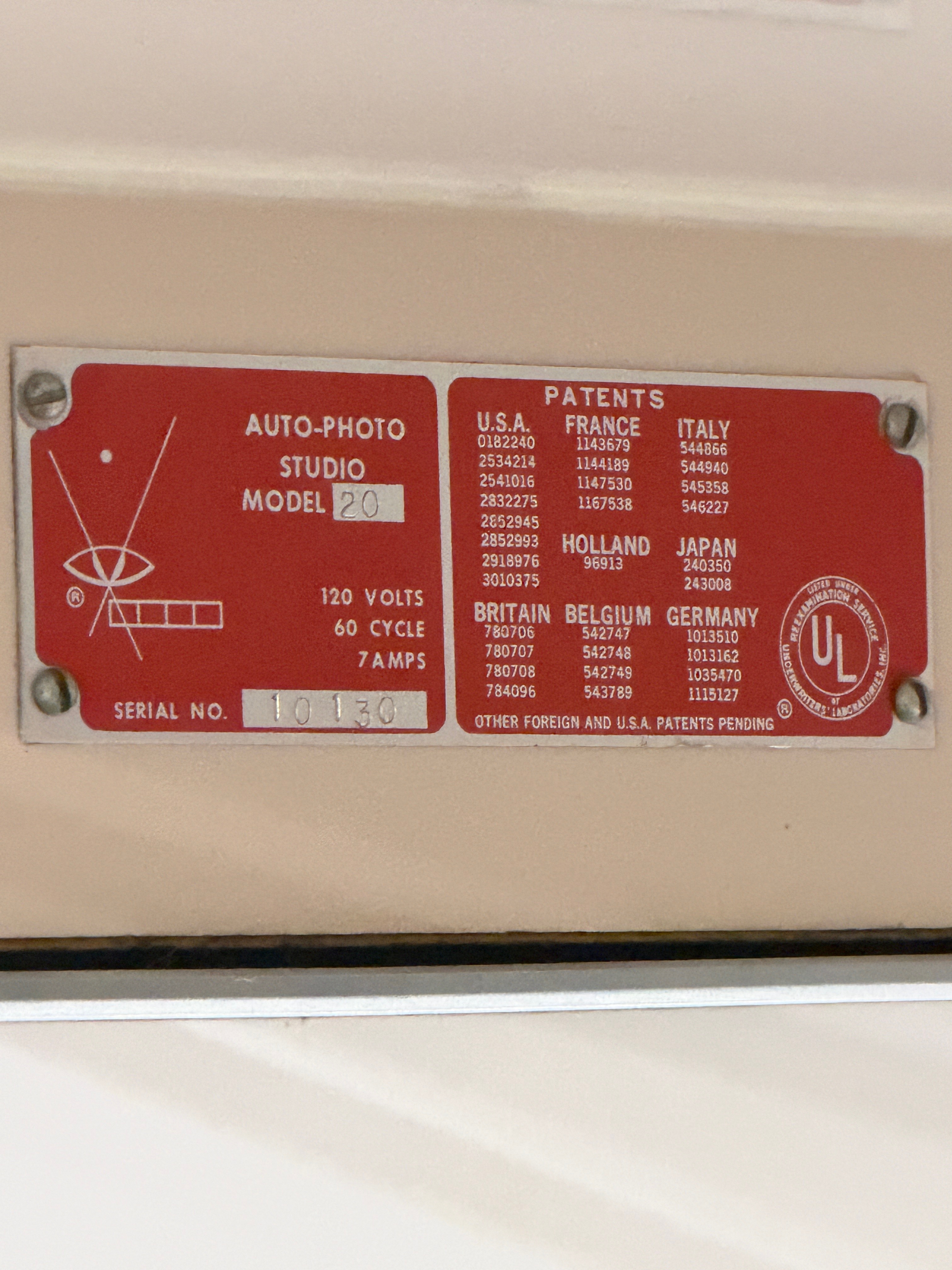
LET'S TAKE A LOOK
Still not sure? That's what the first look is for.
Working or not, start with its location and what you know. Photos help, an asking price is optional, and there's no pressure to sell.