
WHY ANALOG?
Why Analog Photo Booths Are Special
Behind the curtain, an analog photo booth is a tiny photographic darkroom. Light reaches photographic paper, chemistry brings the image to life, and a few minutes later there's a real strip in your hands. No two visits are quite the same.
What makes a booth analog
An analog booth, also called a chemical or "dip-and-dunk" booth, has a camera that exposes light-sensitive photographic paper directly. There's no screen or digital file in between. Once the pictures are taken, a mechanism inside the cabinet moves the paper through a series of chemical baths to develop and fix the image, then rinses and dries it before the strip drops out of the slot.
The details vary from maker to maker and model to model. Some booths make black-and-white strips, some make color. The number of frames, the exact process and the timing all depend on the machine and how its operator has set it up. So treat this as the general idea, not a description of every booth.
What it feels like
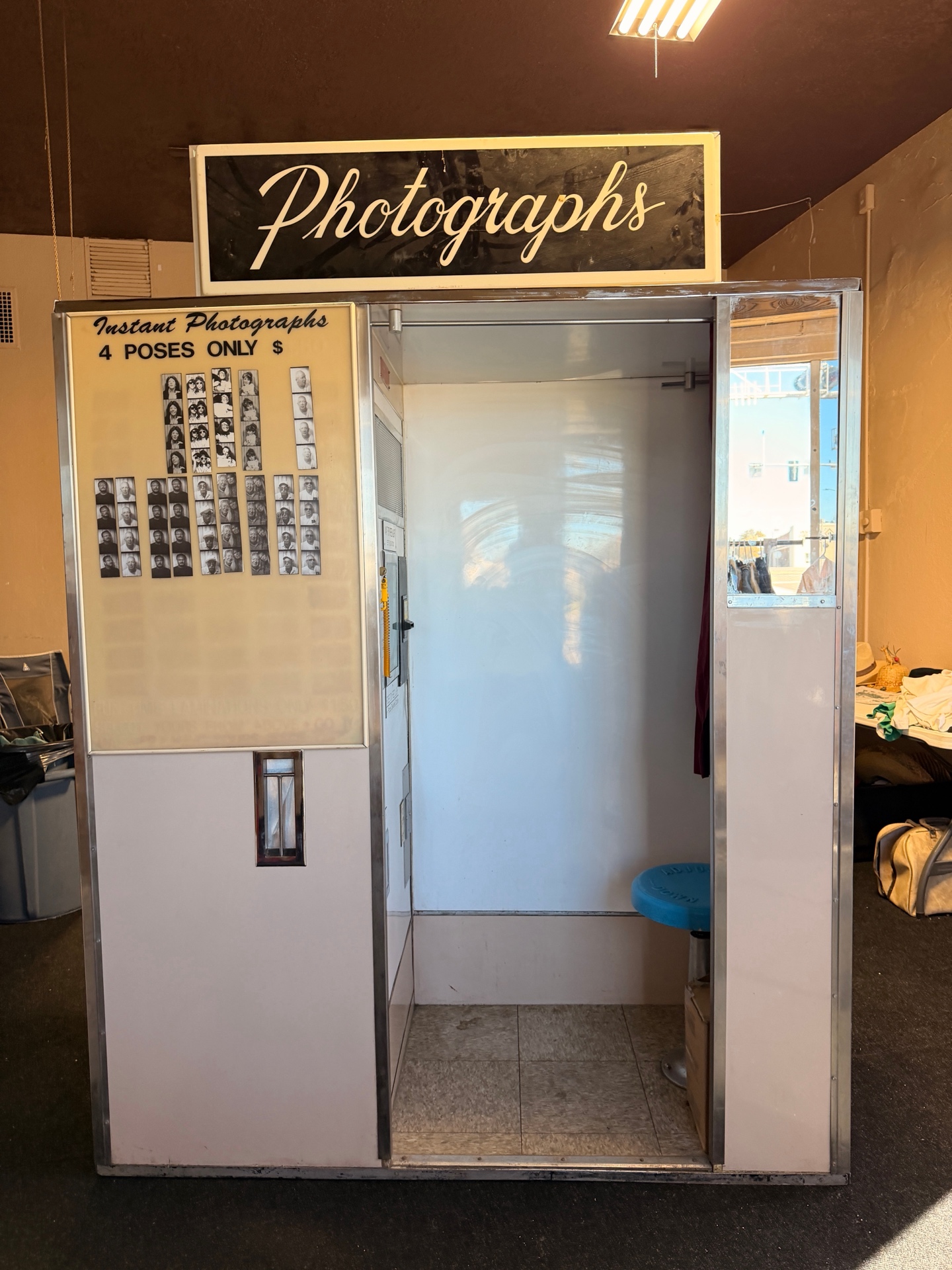
You pull the curtain, sit on the stool, maybe spin it to the right height, and feed the machine. Then the flashes come at their own pace, not when you press a button, so the faces in between are usually the best ones. After that there's the wait: a few minutes outside the booth, listening to it work, trying not to hover over the slot. The strip arrives a little damp, and it's the only copy there is.
Analog versus digital-retro
Many newer booths are built to look vintage but use a digital camera and a printer. They can be a lot of fun and are often easier to keep running. They just make a different kind of picture. A wooden cabinet, a curtain or an old-fashioned sign doesn't prove a booth uses chemical photography, which is why our listings say Analog, Digital-retro or Not confirmed rather than guessing.
Curious about a particular cabinet? Our identification guide walks through the clues that help, and the ones that don't.
Why these machines need care
Analog booths are mechanical, electrical and chemical all at once. They need suitable paper and chemistry, regular cleaning, parts that may no longer be made, and someone who understands how everything fits together. Many of the booths still working today are kept going by dedicated operators and technicians. When one closes or gets put into storage, its know-how and its parts can scatter too.
That's a big part of why The Booth Goose exists: to help people find the booths that are still out there, and to give long-stored machines a careful second look.
The Goose's own Model 20
Our Auto-Photo Model 20 spent years in storage. It's making strips again, and we're writing up the work still needed to make it reliable. You can read the honest version in our restoration story and on the Model 20 guide.
Find one for yourself
The Find a Booth map lists booths the Goose has checked, with each booth's type, whether it's working, and when the listing was last checked. Know one we're missing? Add a booth.
Find a BoothHave an old booth?
If you own one, working or not, start with the value guide. When you're ready, you can tell us about it. We're a possible buyer, not an independent appraiser, so a first look isn't a valuation or a promise to buy.
Questions people ask
- How can I tell if a booth is analog before I go?
- Check the booth's listing: we label each one Analog, Digital-retro or Not confirmed. In person, an analog booth usually takes a few minutes to deliver a strip that comes out slightly damp, while most digital booths print almost instantly. Neither clue is perfect, so ask the venue if it matters to you.
- Why does an analog strip take a few minutes?
- The paper goes through a series of chemical baths and then dries inside the cabinet. Exactly how long it takes depends on the machine and how it's been set up.
- Are digital-retro booths bad?
- Not at all. They can be great fun. They just make pictures differently, and a vintage-style cabinet alone doesn't tell you there's chemistry inside.
- Can I share my strip on The Booth Goose?
- Yes. Every published booth page has a Booth Scrapbook. Share a photo of your strip and a short note from that page. The Goose reviews it before it appears.